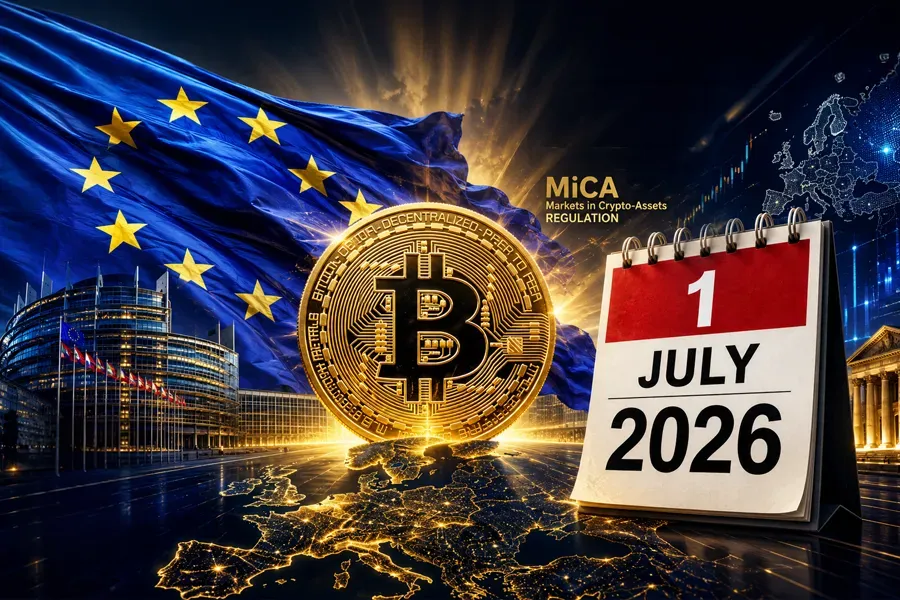
The adoption of the MiCA regime by the European Union in 2023/2024 represents a milestone: for the first time, a comprehensive regulatory framework applies to crypto-assets that were previously largely unregulated. Among the core categories defined by MiCA are e-money tokens (EMTs) and asset-referenced tokens (ARTs); the latter are of particular interest for institutions, financial advisors, and business clients exploring “real-world asset (RWA)” tokenisation, stablecoins referencing baskets of assets, or asset-backed payment/settlement tokens.
What is an Asset-Referenced Token (ART)?
Under MiCA, an ART is a crypto-asset (i.e. a digital representation of value or rights, transferable and storable electronically using DLT) that is not an e-money token, and that “purports to maintain a stable value by referencing another value or right or a combination thereof.”
In practice, this means that an ART may reference:
- a basket of fiat currencies (e.g. EUR + USD + GBP),
- commodities (e.g. gold, oil),
- other crypto-assets, or
- a mix of these.
Because of this broad referencing, ARTs can serve as stablecoins — but not standard “fiat-backed” ones like e-money tokens. Instead, they allow complex underlying economic structures (baskets, collateral pools, multi-asset backing) which may support various business models: tokenised collateral, asset-backed stablecoins, cross-border payments, tokenised commodities, and more.
Why ARTs are important for Romanian financial / business market
For banks, corporates and financial advisors in Romania (and the EU broadly), ARTs open up a new set of opportunities:
- Asset tokenization — Real-world assets (commodities, real estate, basket-structured instruments) can be tokenised, making them more liquid, divisible, tradable across borders, and easily integrated into decentralized or hybrid financial systems.
- Stable value settlement tokens — Companies may use ARTs as payment or settlement rails with (potentially) lower volatility than classic crypto, yet with more diversification than fiat-backed tokens.
- Cross-border stablecoin payments — Because ARTs can reference baskets or multiple currencies/assets, they can be engineered for multi-jurisdictional operations, hedging currency risk, or absorbing volatility.
- Innovation & product design — For fintechs, custodians, funds, tokenised products; ARTs represent fertile ground for structuring novel financial instruments, while benefiting from MiCA’s regulatory clarity.
However, these opportunities exist only under compliance with MiCA’s licensing and regulatory rules.
Regulatory / Legal treatment under MiCA & why licensing is mandatory
Classification and scope
MiCA provides a clear taxonomy of crypto-assets:
- EMTs (e-money tokens)
- ARTs (asset-referenced tokens)
- Other crypto-assets (utility tokens, governance tokens, most cryptocurrencies)
If a token purports to stabilise value by reference to other assets or currencies beyond a single fiat currency, it falls into the ART category — with all regulatory consequences.
Licensing / Authorization requirement
According to MiCA, no person may offer to the public, or seek admission to trading, an ART in the Union unless:
- that person is the issuer of the ART, and
- has been authorised in accordance with the relevant provisions of MiCA (or, if a credit institution, complies with Article 17).
Thus, issuance, marketing, public offering or listing/trading of ARTs is predicated on prior regulatory authorization by the competent authority of the relevant Member State.
Prudential, governance and disclosure requirements
Issuers of ARTs must satisfy a robust set of obligations under MiCA:
- Maintain reserves/assets backing the tokens, with clear rules on liquidity, asset quality and reserve composition.
- Adopt internal governance and risk-management policies: AML/CTF compliance, internal controls, operational resilience, data integrity, conflict-of-interest policies etc.
- Publish a “white paper” (offering document) containing detailed disclosures: token design, risks, redemption terms, structure of underlying assets, reserve policy, rights of holders, environmental or sustainability considerations, management bodies etc.
- Ensure continuous disclosure and update obligations in case of material changes.
Supervision, liability and investor protection
Issuers of ARTs are subject to supervision by the competent regulator (e.g. central bank or financial supervisory authority), which monitors compliance with reserve, governance, marketing and disclosure requirements.
The framework enhances investor / holder protection by ensuring transparency, stable backing, and regulatory oversight — mitigating risks typical to unregulated “stablecoins” (reserve mismanagement, insolvency, liquidity crises, fraud, mis-information, lack of redemption rights).
Failure to obtain authorisation, or non-compliance with MiCA duties, results in prohibition on offering ARTs publicly or seeking admission to trading, with legal consequences (fines, forced suspension, reputational liability).
Why licensing is essential: key rationales
From a business-law firm perspective — and for prospective ART issuers or investors — the requirement for MiCA licensing is not a bureaucratic burden, but a legal shield and market enabler:
- Legal certainty & compliance: without authorisation, any offer or trading of ARTs in the EU would be unlawful. MiCA licensing ensures conformity with EU financial law, avoiding regulatory sanctions and invalidity risks.
- Market trust & credibility: authorised ART issuers signal regulatory compliance, robust reserve management, transparency — vital for institutional investors, auditors, banks and corporate clients evaluating tokenised assets.
- Investor & consumer protection: for projects involving retail or non-professional holders, MiCA safeguards help prevent misuse, mis-information, instability, or insolvency-driven loss.
- Cross-border passporting: an authorisation in one Member State allows offering ARTs across the entire EU (once technical standards are implemented), facilitating scalability, access to institutional capital and harmonised regulatory status.
- Structuring and business model flexibility: with MiCA compliance, tokenisation of real-world assets, basket-backed stablecoins, multi-asset financial products become legally viable — opening room for innovation, financing, tokenised debt/equity, collateral, liquidity tooling.
Practical implications for Romanian banks, corporates and legal / financial advisors
For Romanian market participants (banks, investment funds, corporates, law-firms, auditors, fiscal/consultancy advisors), the arrival of MiCA and ART regulation means:
- Projects for tokenising assets (real estate, commodities, receivables, baskets) require careful legal-compliance planning: structure of reserve assets, governance, issuance vehicle, white paper drafting, conflict-of-interest mitigation.
- Entities wanting to offer stablecoin-like services (for payments, settlement, treasury, cross-border transfers) must evaluate whether the token qualifies as ART (or EMT) and obtain licence before distributing to EU clients.
- Advisory services (legal, tax, audit, compliance) will be in high demand: due diligence on reserves, risk assessments, governance audits, regulatory filings, licence applications, ongoing compliance, reporting obligations.
- For investors and business clients, ARTs offer a regulated alternative to volatile cryptocurrencies: possibility to integrate stable, asset-backed tokens in treasury management, hedging, cross-border operations, RWA exposure — under EU law, with supervision and transparency.
Conclusion
Asset-Referenced Tokens (ARTs) under MiCA mark the European Union’s commitment to regulate stablecoins and asset-backed digital tokens in a comprehensive, transparent and prudentially sound manner. For business entities in Romania (banks, corporates, legal advisors, auditors and financial consultants) ARTs represent a bridge between traditional finance, real-world assets and the tokenised, DLT-driven economy.
Yet, this bridge stands only with a MiCA authorisation. The licensing requirement is the gateway: without it, issuing, offering or trading ARTs in the EU is impermissible. With it, under compliance, governance, disclosure and prudential rules, ARTs become legitimate, scalable, transparent instruments, eligible for institutional adoption, treasury use, asset tokenisation and cross-border operations.
For law firms, tax consultants, or CFOs interested in tokenisation, financing, or innovation in asset management, MiCA-compliant ART-focused structures are now among the most relevant opportunities, but also among the most complex regulatory challenges.